33.2 C
Lagos
Wednesday, March 25, 2026
Home Blog Page 87

Win or lose, Nigeria stays strong

0

AFCON 2023: Super Eagles to extend AFCON record, no matter the result against Bafana


By Rasheed Adewuyi


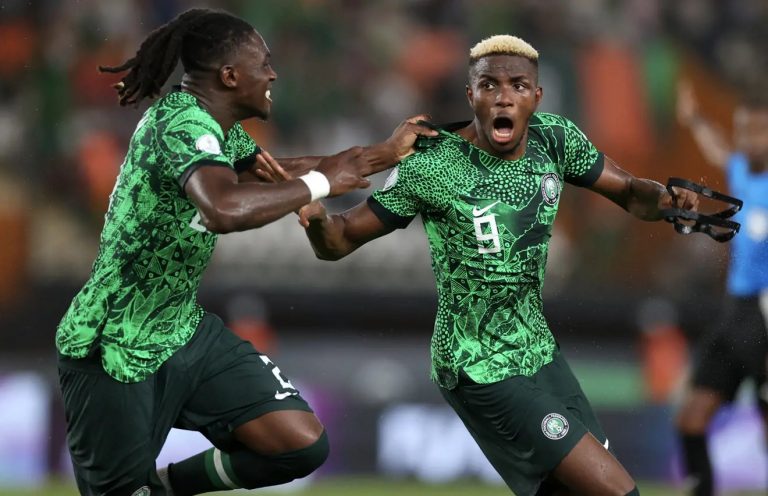
Irrespective of the result of Wednesday’s 34th Africa Cup of Nations semi-final clash with the Bafana Bafana of South Africa, Nigeria will extend her record of being the country with the most last-four appearances at the continental fiesta.


Since making her debut at the 1963 finals held in Ghana, where she was ejected in the group phase after 3-6 and 0-4 losses to United Arab Republic (Egypt) and Sudan respectively, Nigeria has been at the last-four of the tournament 15 times, and has never failed to win a medal each time.


The Eagles have gone ahead to win the trophy and gold on three occasions, won silver on four occasions and won the bronze medals eight times. They have never lost a third-place match.


On Wednesday, the three-time champions will make a 16th appearance in the semi-finals, in what is their 20th appearance at the competition. The only times Nigeria failed to make the semi-finals were in 1963, 1982, 2008 and 2021.


1982: As Cup holders, the Eagles led by Felix Owolabi started brightly by beating Ethiopia 3-0 in Benghazi, and led Algeria 1-0 in their second match before capitulating 2-1 to the Fennecs. They were manhandled 3-0 by Zambia in their third match and crashed out.


2008: The squad led by Joseph Yobo lost 0-1 to Cote d’Ivoire in their first match in Sekondi, but drew 0-0 with Mali and then defeated Benin Republic 2-0 to reach the quarter-finals. They led Ghana 1-0 before goals by Michael Essien and Junior Agogo toppled the advantage and sent the Eagles back home.


2021: Named the best team of the group phase, the Eagles led by Ahmed Musa defeated Egypt, Sudan and Guinea Bissau in the group phase in Garoua to earn maximum points, only to lose 0-1 to Tunisia in the Round of 16.


Below is a cursory look at all the 15 previous AFCON semi-final matches that Nigeria have been involved in:


11 March 1976: The 1976 finals in Ethiopia were played on league basis – the only tournament in the competition’s history conducted in that format. There was a final round of the competition involving Nigeria, Guinea, Morocco and Egypt. After a 1-1 draw with Guinea, what could be considered as Nigeria’s own semi-final match was against eventual champions Morocco on 11th March 1976. The ever-prolific Baba Otu Mohammed scored for Nigeria in the 57th minute, but the Green Eagles allowed two late goals by Ahmad Faras (elected Africa Player of the Year that year) and Redouane Guezzar. After beating Egypt 3-2 three days later, with goals from Haruna Ilerika (a brace) and Mudashiru Lawal, Nigeria (3 points) finished third in the final classification behind Morocco (5 points) and Guinea (4 points) and were awarded the bronze medals.


14 March 1978: Ahmed Abdulla Nasur put Uganda ahead at the Kumasi Sports Stadium, and Martins Eyo equalized for Nigeria in the 12 minutes into the second half. But Philip Omondi scored for Uganda late on and Nigeria were condemned to the third-place match, where they were awarded a 2-0 win after Tunisia abandoned the game in the 42nd minute in protest at Nigeria’s equalizer by Baba Otu Mohammed.


19 March 1980: Felix Owolabi scored the only goal against Morocco after only nine minutes at the National Stadium, Lagos. Christian Chukwu, Segun Odegbami, Adokiye Amiesimaka and Ifeanyi Onyedika all tried to add to the tally to no avail. The hosts went ahead to win the trophy after beating Algeria 3-0 in the final three days later at the same venue.


14 March 1984: In what was easily the match of the tournament, Egypt Pharaohs, beaten 1-0 by Nigeria four years earlier in a group phase match in Ibadan, raced to a two-goal lead within the half-hour. The Eagles had experienced something similar in their group phase match against Malawi, before Clement Temile restored parity. In Bouake, Stephen Keshi reduced the tally from the penalty spot, following up after the ball crashed against the bar. The captain’s inch-perfect cross in the second half was converted by Bala Ali, whose headed effort saw the ball roll past Thabet El-Batal. Nigeria won 8-7 after a penalty shootout.


23 March 1988: Nigeria went into a first-half lead in Rabat when Sam Okwaraji’s miss-cued shot was diverted into the net by Abderrazak Belgherbi. Algeria equalized with only four minutes left when Rachid Maatar headed home from a corner kick. The two teams went into a marathon penalty shootout after extra time failed to produce a winner. Ademola Adeshina and Yisa Sofoluwe missed for Nigeria, and Belgherbi and Maatar also missed for Algeria. A total of 10 players on each side had taken, including goalkeepers Peter Rufai and Nasrredine Drid. They started all over again, and after Augustine Eguavoen scored, Rufai saved from Lakhdar Belloumi. Nigeria lost the final by a solitary goal to Cameroon in Casablanca four days later.


12 March 1990: The Super Eagles defeated Zambia 2-0, with excellent goals from Uche Okechukwu and Rashidi Yekini in Annaba. In the final played four days later in Algiers, Cherif Oudjani’s long-range effort sailed past Aloysius Agu for the only goal of the match to give Algeria their first continental title.


23 Jan 1992: Regional rivals Ghana and Nigeria started like a house-on-fire in Dakar, and Mutiu Adepoju headed Thompson Oliha’s cross past Edward Ansah in the 11th minute. Abedi Pele restored parity with his own header two minutes before half time, and Ghana won it with a fierce shot into the roof of the net by Prince Polley nine minutes into the second half. Two days later, the Eagles edged Cameroon 2-1 for the bronze medals.


6 April 1994: Michel Bassole headed Cote d’Ivoire in front after 19 minutes, but Benedict Iroha equalized after a mesmerizing one-two with Jay Jay Okocha at the Stade El Menzah. Bassole scored again, and Nigeria also scored (through Rashidi Yekini) to make it 2-2 before half time. Both teams threw the kitchen sink at themselves in the second half and during extra time, but there were no more goals and it ended in a penalty shootout. Samson Siasia lost his kick but Bassole and Amani Yao also fluffed for the Elephants. Four days later at the same venue, Nigeria defeated Zambia 2-1 to win the trophy and gold.


10 Feb 2000: Banned from the 1998 finals for their failure to turn up in South Africa in 1996 to defend their title, Nigeria were brimming with vitality as co-hosts with Ghana in 2000. In the semi-finals, Coach Johannes Bonfrere unscrewed the plans of the Bafana Bafana by playing Tijani Babangida from the left side, and he caused them all sorts of problems besides scoring two first-half goals at the National Stadium, Lagos. The Eagles lost the Final to Cameroon three days later after a penalty shootout at the same venue.


7 Feb 2002: At the Stade Modibo Keita, Bouba Diop put Senegal ahead early in the second half. Wilson Oruma failed to convert a penalty kick, but Julius Aghahowa made it 1-1 two minutes from the end. In first-half of extra time, Lassina Diao got the winner for Senegal, and the Eagles were condemned to third place. They defeated hosts Mali 1-0 in the city of Mopti two days later to win the bronze.


11 Feb 2004: The November 7 Stadium in Rades was a cauldron of noise and passion as the Eagles, who had eliminated Cup holders Cameroon in the quarter-finals, took the kick-off against the host nation. Jay Jay Okocha and Nwankwo Kanu made life difficult for the Khaled Badri-led defence but the first half produced no goal. There were 60,000 spectators whose whistling rang out each time more than that of Beninoise referee Bonaventure Codjia Coffi. Nigeria went ahead when Okocha scored from the spot after Kanu was double-teamed in the box. Badra levelled from the spot as well eight minutes from time, after Seyi Olofinjana tripped Ziad Jaziri. In the penalty shootout, Peter Odemwingie lost his kick and Nigeria were sent to the third-place match after Karim Haggui beat Vincent Enyeama. The Eagles won the third-place match by beating Mali 2-1 back in Monastir three days later, with goals by Okocha (who would emerge the tournament’s Most Valuable Player) and Odemwingie.


7 Feb 2006: Nigeria, who had again eliminated the Cup holders (Tunisia) in the quarter-finals, survived a torrid first half at the Alexandria Stadium. In the second half, Joseph Enarkharire mis-timed his leap from a high ball and Didier Drogba sneaked in to beat Enyeama from close range. It was the only goal of the game, and the Eagles would beat Senegal by a solitary goal from Garba Lawal in Cairo to pick up the bronze medals.


28 Jan 2010: Asamoah Gyan scored the only goal of the match from a corner kick at the Estadio 11 de Novembro in Luanda. It meant the Eagles had to go back to Benguela, where they prosecuted their group phase matches, for the third- place match against Algeria, which they won with a goal by Obinna Nsofor after a sublime pass by Nwankwo Kanu.


6 Feb 2013: Nigeria had sensationally eliminated in-form Cote d’Ivoire in the quarter-finals, and arrived at the Moses Mabhida Stadium in Durban as clear favourites against Mali. Elderson Echiejile, Brown Ideye and Emmanuel Emenike scored before half time, and Ahmed Musa added a fourth on the hour. The Eagles went ahead to defeat Burkina Faso in the final played four days later at Soccercity, the only goal scored by Sunday Mba.


14 July 2019: Nigeria had eliminated Cup holders Cameroon in the Round of 16, and then kicked out South Africa (who eliminated hosts Egypt) in the quarter-finals. Five minutes from recess against Algeria at the Cairo International Stadium, William Ekong inadvertently diverted the ball into his own net. Odion Ighalo, who would emerge tournament top scorer, scored from the spot to level in the second half. But the Fennecs flew into the Final after Riyad Mahrez’ vicious shot from a free-kick deep in added time sailed past Daniel Akpeyi. Ighalo scored the only goal of the third-place match against Tunisia three days later to give Nigeria the bronze medals.  


Semi-final: Nigeria v South Africa

0

Facts and figures


Teboho Mokoena of South Africa celebrates a goal during the 2023 Africa Cup of Nations match between Morocco and South Africa. Credit: cafonline


  • Nigeria will play South Africa in the semi-finals of the TotalEnergies CAF Africa Cup of Nations on Wednesday in Cote d’Ivoire, Cafonline reports.


  • Below are the facts and figures for the upcoming match:


  • This will be the fourth encounter between Nigeria and South Africa at the CAF Africa Cup of Nations, with the Super Eagles winning the previous three by an aggregate score of 8-1.


  • Nigeria and South Africa last met in the semi-finals at the CAF Africa Cup of Nations in 2000, with the Super Eagles running out 2-0 winners thanks to a brace from Tijani Babangida.


  • Nigeria is in a record 15th semi-final at the CAF Africa Cup of Nations. At the same time, they’ve only progressed from one of their last six at this stage, winning the South Africa competition in 2013.


  • Nigeria have won their last four AFCON games without conceding; they could keep five consecutive clean sheets in the competition for the first time since March 1982 (W4 D1), while they’ve never done so when winning all five games.


  • South Africa is playing in their fourth semi-final at the CAF Africa Cup of Nations and their first since 2000 when they were eliminated by opponents Nigeria (2-0).


  • South Africa has kept four consecutive clean sheets at the Africa Cup of Nations for the first time (W2 D2), as many as recorded in their previous 21 matches combined.


  • Nigeria has just three different goal scorers (excluding own goals) at AFCON 2023 (Lookman, Osimhen, and Troost-Ekong), their fewest in a single edition since 2008 (2, Yakubu and Mikel).


  • South Africa have had six shots following a high turnover at AFCON 2023, only Egypt have had more (7), while only Morocco (9) have had more direct attacks than the Bafana Bafana (8) in the competition this year.


  • Nigeria’s Victor Osimhen has only scored one goal despite attempting the most shots (19) at the 2023 Africa Cup of Nations – a shot conversion rate of 5.3%, with an expected goals tally of 3.09; he’s underperforming his xG by a more significant margin than any other player (-2.09).


  • Nigeria have the highest expected goals (8.59) tally and the most big chances (18) at AFCON 2023, with all six of their goals coming inside the box – only Côte d’Ivoire (46) have had more shots from inside the box than the Super Eagles (44).


  • Themba Zwane has been directly involved in 50% (3/6) of South Africa’s goals at AFCON 2023 (two goals, one assist), while he could become the first Bafana Bafana player to score three goals in a single edition of AFCON since Shaun Bartlett in 2000 (5).


Semi-final: Cote d’Ivoire v DR Congo

0

Facts and figures


  • Hosts Cote d’Ivoire will play DR Congo in Wednesday’s TotalEnergies CAF Africa Cup of Nations semi-finals in Abidjan. 


  • Below are the facts and figures for the game:


  • Côte d’Ivoire has faced DR Congo five times previously at the CAF Africa Cup of Nations (W2 D2 L1), their first encounter since a 2-2 draw in the 2017 group stages.


  • In the knockout phase, the only previous meeting between Côte d’Ivoire and DR Congo was at the semi-final stage in 2015; the Elephants won 3-1 and the trophy that year.


  • This is Côte d’Ivoire’s 10th appearance in the CAF Africa Cup of Nations semi-finals, becoming the fifth nation to play in as many as 10 semi-finals, along with Nigeria (15, inc. this year), Egypt (13), Ghana (12) and Cameroon (10). It’s their first since 2015 when they beat this year’s opponents DR Congo 3-1 under Herve Renard.


  • DR Congo have reached their sixth CAF Africa Cup of Nations semi-final – they have won the previous two against the hosts (v Ethiopia in 1968 and Egypt in 1974) but have never won a semi-final match when not playing that year’s hosts, losing all three (1972, 1998 and 2015).


  • On the last three occasions the CAF Africa Cup of Nations host nation has reached the semi-final, they have been eliminated without scoring a goal: Ghana in 2008 (lost 1-0 to Cameroon), Equatorial Guinea in 2015 (lost 3-0 to Ghana) and Cameroon in 2021 (drew 0-0 with Egypt and lost 3-1 on pens). The last host to reach the final was Egypt in 2006.


  • Côte d’Ivoire reached the 2023 CAF Africa Cup of Nations semi-final thanks to a 2-1 win over Mali, which saw them score in the 90th and 120th minutes to win. They were only the second team to score in the 90th and 120th minutes in the exact AFCON match, along with Morocco vs Algeria in 2004.


  • Should DR Congo reach the 2023 CAF Africa Cup of Nations final, it would be their first final since 1974. This would represent the most significant gap between a nation reaching AFCON finals, with Tunisia currently having the most extended wait between 1965 and 1996.


  • Côte d’Ivoire could become the first nation to reach the final of the CAF Africa Cup of Nations despite suffering a four-goal defeat earlier in the tournament (lost 4-0 to Equatorial Guinea) since Nigeria in 1990, who lost 5-1 to Algeria in the group stages before facing them again in the final that year, losing 1-0.


  • 20-year-old Oumar Diakité scored Côte d’Ivoire’s 120th-minute winner against Mali in the 2023 AFCON quarter-final, becoming the Elephants’ youngest AFCON scorer since Tchiressoua Guel in 1994 (18 years, 31 days) and only the second player in the last 11 editions under the age of 21 to score a winning goal in the knockout stages, along with Dango Ouattara for Burkina Faso vs Tunisia in 2022 (quarter-final).


  • Only Angola’s Fredy (11) has created more chances at the 2023 CAF Africa Cup of Nations than DR Congo’s Arthur Masuaku (10), with Masuaku playing more passes into the opposition box than any other player (53). Despite this, he has yet to register an assist.


  • Yoane Wissa has scored two of DR Congo’s five goals at this year’s CAF Africa Cup of Nations, scoring against Zambia and Guinea. Only four players have ever netted in three separate games at a single AFCON for the Leopards: Mayanga Maku in 1972 (3), Ndaye Mulamba in 1974 (5), Jerry Tondelua in 1998 (3) and Junior Kabananga in 2017 (3).


Osimhen on his way to Bouake

0

Nigeria striker cleared to face Bafana Bafana on Wednesday in AFCON semifinal clash


By Ed Emeanua


Multiple Super Eagles sources claim that Super Eagles bomber Victor Osimhen is now expected in Bouake after being cleared for an abdominal discomfort problem by the Nigeria medical team.


The Super Eagle’s medical team has reportedly cleared the Nigeria striker for the clash against Bafana Bafana of South Africa on Wednesday in Bouake, Cote d’Ivoire.


Following a reported abdominal discomfort,  Osimhen was not in the Nigerian entourage to Bouake, the venue of the semifinal clash with South Africa on Monday.


Following his most recent illness, he was immediately declared doubtful for the epic AFCON 2023 semifinal clash with South Africa’s national football side.


It was reported that the Partenopei striker would be reassessed on Tuesday morning and, if deemed fit to play, would be allowed to join other Nigerian squad members who arrived safely in Bouake on Monday.


Osimhen started all of the Super Eagles’ games in Cote d’Ivoire, scoring just a goal and notching an assist to his credit.

Kiptum’s world marathon record now ratified

0

Ratified: Kiptum’s world marathon record


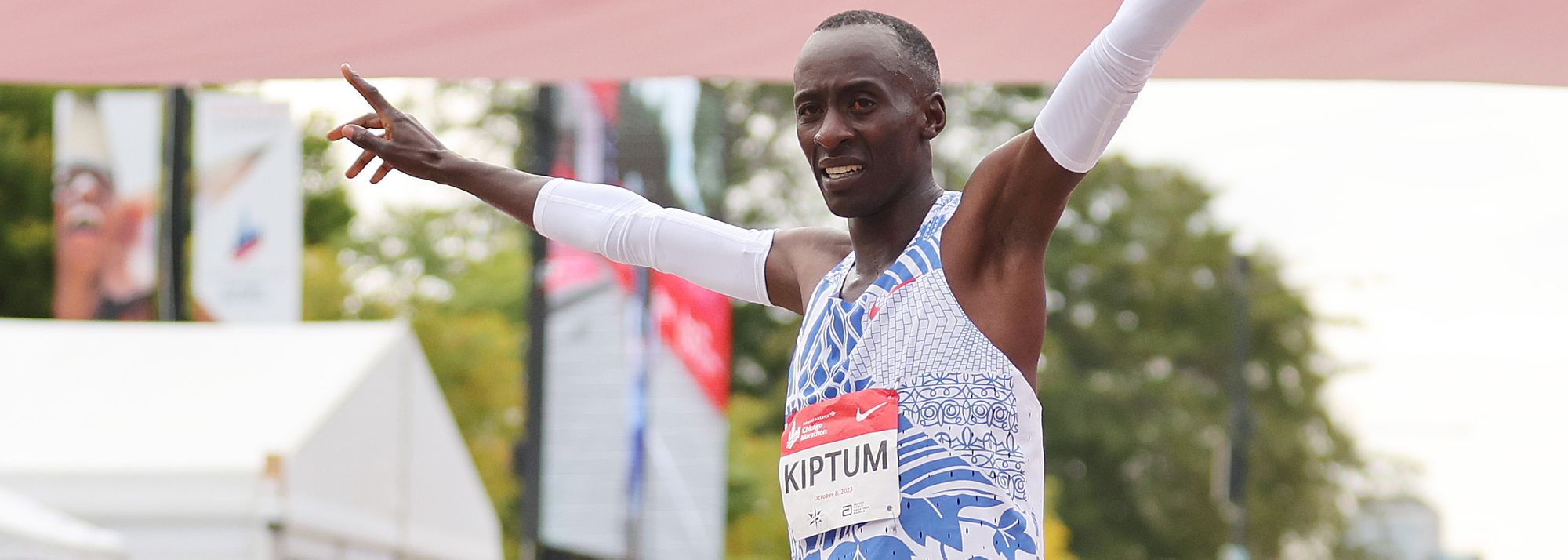
Kenya’s Kelvin Kiptum in Chicago (© Getty Images)


Men’s World Marathon record

2:00:35 Kelvin Kiptum (KEN) Chicago 8 October 2023

Kelvin Kiptum’s world marathon record of 2:00:35, set in Chicago last year, has been ratified.


Kenya’s Kiptum became the first athlete to break 2:01 in a record-eligible marathon, taking 34 seconds off the world record at the Bank of America Chicago Marathon on 8 October.


With that performance, Kiptum improved his PB by 50 seconds to surpass the world record of 2:01:09 set by his compatriot Eliud Kipchoge in Berlin on 25 September 2022.


Kiptum pushed the pace throughout the race in Chicago. He broke away from a seven-strong lead group after reaching 5km in 14:26, joined by his compatriot Daniel Mateiko. They were on world record pace at 10km and passed in 28:42, but the tempo dropped a little and reached halfway in 1:00:48.


After 30km was passed in 1:26:31, Kiptum kicked and dropped Mateiko. A blistering 5km split of 13:51 took him to the 35km checkpoint in 1:40:22, and he was on sub-2:01 pace, 49 seconds ahead of Mateiko.


Continuing to run urgently, Kiptum passed 40km in 1:54:23 – after a 27:52 10km split. He went on to win the race by almost three and a half minutes, crossing the finish line at 2:00:35.


“I knew I was coming for a course record, but a world record – I am so happy,” he said.”. “A world record was not on my mind today, but I knew I would be a world record-holder one day.” 

Adingra and Diakité – New Ivorian wave

0

Carefree, innovative, and ambitious, Simon Adingra and Ouma Diakité are the next generation of Ivorian football


Emerse Fae, Elephants coach Photo Credit: CAFONLINE


Carefree, innovative, ambitious, and above all, all full of talent. Simon Adingra and Ouma Diakité represent the next generation of Ivorian football, CAFONLINE reports.


Aged 22 and 20, respectively, the two young men experienced winding paths before being the protagonists of the Elephants’ qualification for the semi-final of the TotalEnergies CAF Africa Cup of Nations, Cote d’Ivoire 2023.


Standing 1.75 meters tall, Simon Adingra had a difficult journey before becoming a footballer.


“I’ve had some difficult times, and that has shaped my character. I remember the day an “agent” came to my house because he wanted to recruit me to go to an academy in Benin. We went to this country with nine other boys, except that the academy in question did not exist. The crook left with our money, and we found ourselves on the street. I had to take on odd jobs to meet my needs,” he says.


“When I think of everything I have experienced, I must give the best of myself for my country, my family, especially to honor my father, who is no longer with us and has always encouraged us to go this direction,” he explains.


Entering the game in the 86th minute against Mali, the right winger conditioned himself to be decisive and alert.


“I told myself that I would have an opportunity and that it was up to me to seize it. And yes, I am lucky. I can tell you that it was, as an individual, one of my biggest emotions as a footballer. My heart was beating a thousand miles an hour,” admitted Adingra.


Another rising star is, of course, Oumar Diakité. Like Adingra, number 14 of the Elephants came into play during the second period of the match against the Eagles.


Active on the left flank, the native of Bingerville wasted no time getting noticed. First, by receiving a yellow card, then by scoring the winning goal on a play initiated by Simon Adingra before being unfortunately sent off.


“My joy was so great that I forgot I had a yellow card. My mistake. I couldn’t play the half, but I don’t think it will hurt my team because we have the depth, and even if I’m not there, we’ll be able to do the job,” said Diakité.


Diakité imagined for a long time to be the Cote d’Ivoire hero and even dreamt of it.


“It’s an inexplicable feeling. During my training at ASEC, I began training as an engineer. Even though I was thriving in football, I needed to secure my life in a certain way. Because everything moves very quickly in this world.”


On Wednesday, 07 February, the Elephants return to the majestic Alassane Ouattara Olympic stadium in Ebimpé, where their African dream was dented by a 4-0 thrashing handed by Equatorial Guinea 4-0.


They hope to erase that memory when facing DR Congo in a 20h00 GMT kick-off.


Broos revels in South Africa’s success

0

As Bafana Bafana makes TotalEnergies CAF AFCON progress after years of lack of self-belief

cafonlinecom
cafonlinecom


South Africa coach Hugo Broos admitted he took great satisfaction from his side’s TotalEnergies CAF Africa Cup of Nations semi-final qualification after years of pessimism surrounding Bafana Bafana  Cafonline reports.


Broos guided the 1996 champions past Cape Verde on penalties on Saturday to set up a last-four clash with Nigeria.


The Belgian believes the achievement can boost South African football after many had written off their chances before the tournament.


“Many people in South Africa didn’t believe in this team, but we believed, and the players believed in themselves,” Broos stated after the quarter-final win.


“Reaching the semi-finals is great for South African football, which has struggled in recent years.”


Broos reserved special praise for goalkeeper Ronwen Williams, whose shootout heroics were crucial to victory.


“When you have a keeper who saves four penalties, it’s not luck. He was man of the match today,” said Broos.


The coach also acknowledged the difficult task awaiting South Africa against a star-studded Nigeria side boasting the likes of Ademola Lookman.


But he insisted his squad will be ready for Wednesday’s showdown after banishing past doubts over their quality.


“The semi-final will be tough against Nigeria’s great players, but we have nothing to lose now,” Broos stated.


“The players will recover and prepare, but staying focused is essential.”


After years in the doldrums, South Africa is daring to dream again thanks to Broos’ vision and belief.


Revenge on Bafana Bafana’s cards

0

As South Africa aims to even the score against the Super Eagles


South Africa stuns Italy to reach Women’s World Cup last 16


The TotalEnergies CAF Africa Cup of Nations, Cote d’Ivoire 2023, has reached a fever pitch, with the semifinal line-up officially confirmed after Nigeria, DR Congo, Cote d’Ivoire, and South Africa secured their respective places.


Bafana Bafana faces old-time foes, Nigeria, in the first semifinal on Wednesday, 7th February, repeating the 2000 semifinal that saw the Super Eagles overcome the 1996 champions 2-0 in Lagos.


The rivalry between the two sides will be renewed in Cote d’Ivoire as Nigeria chases its fourth title while South Africa looks ahead to an elusive second.


Following the 2000 semifinal defeat, the Super Eagles edged Bafana Bafana in the quarterfinals in the 2019 edition in Egypt with a narrow 2-1 win.


The two sides have met 14 times, with the Super Eagles enjoying the lion’s share of the results with seven victories against 2 for South Africa, with the remaining five ending in stalemates.


This will be another entry for the rich history books of African football, with Bafana Bafana now under the guidance of two former African champions against a star-studded Super Eagles side.


The Southern African side is led by TotalEnergies AFCON 2017-winning coach Hugo Broos, who guided the Indomitable Lions of Cameroon to victory five years ago.


Helman Mkhalele, a vital member of the 1996 Golden Generation, assists the Belgian tactician, who won South Africa’s first and only African title.


It will be an uphill battle containing an explosive Super Eagles side led by the dangerous Victor Osimhen and the red-hot Ademola Lookman.


On Wednesday, the kick-off at the Stade de la Paix in Bouake is at 17:00.


Nigeria equals Egypt’s CAF AFCON record

0

Nigeria joins the Pharaohs at the top of the list of countries with the most appearances in the last four of the competition

Bouake Stadium, venue of Nigeria vs South Africa Credit Cafonline


Nigeria will be playing in the semi-finals of the TotalEnergies CAF AFCON for the 16th time, joining the Pharaohs at the top of the list of countries with the most appearances in the last four of the competition, CAFONLINE reports.


The Super Eagles secured their ticket to the semi-finals of the TotalEnergies CAF AFCON Côte d’Ivoire 2023 after a 1-0 win over Angola through Ademola Lookman’s strike.


Nigeria competes for the 16th time in 20 appearances in the semi-finals, equaling a record set by Egypt, who have also reached the last four 16 times in 26 appearances.


Behind these record-holders, Ghana comes third with 14 semi-finals played in 24 appearances.


Cameroon and Côte d’Ivoire have each reached the semi-finals of Africa football’s showpiece event ten times.


Nigeria, however, has only lifted the trophy three times, with Egypt winning it seven times as the record holder, followed by Cameroon, who have won it five times, and Ghana, who have four trophies.


On Wednesday, 7th February 2024, José Peseiro and his men will face South Africa to play in the semi-finals, hoping to qualify for their 8th final, one less than Ghana, two less than Egypt, and one more than Cameroon.


European golds on line in Bucharest

0

Nine return to defend European titles in Women’s Wrestling


Nine out of the ten European women’s wrestling champions will return to the European Championships, hoping to defend their gold medals in Bucharest next week. The one not coming, Alina HRUSHYNA (UKR), has yet to recover from an injury that kept her out of the World Championships, Vinay Siwach reports for United World Wrestling.


Two of them, Andreea ANA (ROU) and Alexandra ANGHEL (ROU), will be the most keen on repeating as European champions. In Zagreb last year, they gave the double gold to Romania, but next week, wrestling at home will give them extra motivation to repeat.


Ana and Anghel will be in the 55kg and 72kg of non-Olympic weight classes, respectively. Ana is a two-time European champion and will be the favorite in Bucharest. If any, former age-group European champion Ekaterina VERBINA (AIN) can trouble Ana as she returns to competition. Ukraine is sending Mariia VYNNYK (UKR), while Mariana DRAGUTAN (MDA), Roksana ZASINA (POL), and Tuba DEMIR (TUR) are also in the field.


Anghel, who defeated 68kg world champion Buse TOSUN (TUR) to win the gold medal at 72kg last year, can have a more challenging time this year. 68kg European champion Yuliana YANEVA (BUL) is moving to 72kg after losing her place to Mimi HRISTOVA (BUL) at 68kg. Kendra DACHER (FRA), age-group world medalist Wiktoria CHOLUJ (POL), U23 world champion Nesrin BAS (TUR), and Anastasiya ALPYEYEVA (UKR) are also in this weight class.


Yasemin ADAR (TUR)Yasemin ADAR (TUR) is a six-time European champion. (Photo: UWW / Kadir Caliskan)


2022 world champion Yasemin ADAR (TUR) returns to the mat after one year, skipping all competitions after the 2023 Euros. Despite her time off, she will be the favorite to win the 76kg gold medal. Adar is chasing her seventh European title after six golds and a silver medal.


Former European champion Epp MAE (EST) will be her biggest threat as she also looks to return after a medalless World Championships. Mae recently trained in Japan with world champion Yuka KAGAMI (JPN). Anastasiia OSNIACH SHUSTOVA (UKR) also hopes to make the finals.


Turkiye’s world champion in 2023, Tosun, will be at 68kg. She had a disastrous start to the year, losing her first round at the Zagreb Open Ranking Series in January. Tosun will look to put that behind her and start afresh for the Bucharest tournament.


To avoid any disappointments, Tosun will have to navigate past world bronze medalist Koumba LARROQUE (FRA), Elis MANOLOVA (AZE), 65kg European champion Mimi HRISTOVA (BUL) and former European champion Tetiana SOVA RIZHKO (UKR). Larroque won the European Championships gold medal in 2021 and will be keen on returning to the podium.


Vanesa KALADZINSKAYA (AIN)Vanesa KALADZINSKAYA (AIN) will look to win her first European title since 2020. (Photo: UWW / Amirreza Aliasgari)


Two world silver medalists, Vanesa KALADZINSKAYA (AIN) at 53kg and Anastasia NICHITA (MDA) at 59kg, will also be in action in Bucharest.


Kaladzinskaya last wrestled at the European Championships in 2020 and won the gold medal. She will start as the favorite at 53kg despite Jonna MALMGREN (SWE) and Maria PREVOLARAKI (GRE) entering the tournament.


Kaladzinskaya won the silver medal at the World Championships, dropping the final to Akari FUJINAMI (JPN). It was her first competition since winning a bronze medal at the Tokyo Olympic Games.


The two-time defending champion Malmgren will have her task cut out this year. She lost to Kaladzinskaya at the World Championships, but that loss can only be a lesson for the former U20 world champion.


Former Maria PREVOLARAKI (GRE), Ekaterina POLESHCHUK (AIN), Sztalvira ORSUS (HUN), Iulia LEORDA (MDA), and Mariia YEFREMOVA (UKR) can upset the field in Bucharest and finish on the podium.


Defending champion Nichita is the clear front-runner for the gold at 59kg. After winning a silver medal at the World Championships at 57kg, Nichita returned to competition in Zagreb but suffered a loss to Kexin HONG (CHN).


Nichita will be drawn randomly into the bracket as she has no ranking at 59kg. The top seed will be Othelie HOIE (NOR), a returning European and world bronze medalist. Age-group world medalists Alesia HETMANAVA (AIN) and Anastasiia SIDELNIKOVA (AIN) can also finish on the podium.


Grace BULLEN (NOR)Grace BULLEN (NOR) and Bilyana DUDOVA (BUL) put up a thriller last year in the 62kg semifinal. (Photo: UWW / Kadir Caliskan)


At 62kg, world bronze medalist Grace BULLEN (NOR) will have a chance to win her first European gold medal since 2020. She was a silver medalist last after suffering a heartbreaking loss to Iryna KOLIADENKO (UKR) in the final. She will have a chance to win the gold medal this year. Koliadenko has moved to 65kg for this tournament and is replaced by veteran Yuliia TKACH (UKR), which will also be a big test for Bullen.


Tkach, the silver medalist at 59kg last year, has moved to 62 kilograms after world bronze medalist Koliadenko moved to 65kg. Tkach has every trick up her sleeve to keep Bullen at bay. But the Norway wrestler has recently improved by leaps and bounds and can be called the favorite for this event.


One wrestler who will be waiting keenly to meet Bullen on the mat is Bilyana DUDOVA (BUL). She suffered a 7-6 loss to Bullen in the semifinal last year and finished with a bronze medal. Dudova, a former world champion at 59kg, still tries to find her feet at 62kg. The two can only meet in the final, thanks to being seeded one and two.


Former U20 world champion Alina KASABIEVA (AIN) will also like to finish on the podium.


Mariya STADNIK (AZE)Mariya STADNIK (AZE) became a nine-time European champion last year. (Photo: UWW / Kostadin Andonov)


At 50kg, Mariya STADNIK (AZE) will look to extend her record streak of 10 European titles [12 as she has two European Games gold as well]. Last year, Oksana LIVACH (UKR) gave Stadnik a scare in the final, but the Azerbaijan wrestler controlled the second period to keep her energy and win the gold.


A year older at 35, Stadnik will again be tested by the young wrestler participating in Bucharest. Livach will look to avenge the loss from last year, while Miglena SELISHKA (BUL) and Emilia VUC (ROU) will also have a chance to upset the wrestling legend.


The 57kg class will see a new European champion, as Hrushyna has not entered for her title defense. Tokyo silver medalist Iryna KURACHKINA (AIN) will be the favorite, along with returning silver medalist Zhala ALIYEVA (AZE) and bronze medalist Evelina NIKOLOVA (BUL). Veteran Veronika CHUMIKOVA (AIN), U20 world champion Aurora RUSSO (ITA), and former world bronze medalist Anhelina LYSAK (POL) are also entered.


World bronze medalist and returning silver medalist Irina RINGACI (MDA) will be at 65kg, hoping to win the gold she dropped against Hristova last year. Ringaci will be tested by Taybe YUSEIN (BUL), Kriszta INCZE (ROU), and a world bronze medalist at 62kg Iryna KOLIADENKO (UKR).