31.9 C
Lagos
Friday, March 13, 2026
Home Blog Page 115

AFCON 2023: Know the Teams’ nicknames

Group A teams at the TotalEnergies AFCON 2023


Super Eagles of Nigeria


Names define us. They represent us and primarily tell the world who we are, what we stand for, and what we are about. In Africa, our names carry a lot of meaning.


As we approach the TotalEnergies CAF Africa Cup of Nad’Ivoireôte d’Ivoire 2023, CafOnline.com must closely examine the nicknames of all 24 teams participating in this year’s edition.


These names speak to the spirit of the teams, to the core celebration of the people back home who hold the pride of the nation dear to their hearts, and they ultimately celebrate the patriotic essence of wearing national team colors.


It should be noted that most of these nicknames have an immense attachment to the tourism aspect of the countries – from wild animals to national symbols to iconic geographical locations.


The variety speaks to the never-ending attachment that cuts across.


Below are the monikers of the teams in Group A


COTE D’IVOIRE – The Elephants


The host nation derives its name from the elephant. The ivory tusks on the largest mammal give it a graceful yet conquering demeanor that sets it apart. Côte d’Ivoire used to be one of the biggest exporters of ivory, given the large population of African elephants.


Their national football team has since embraced this name – the Elephants with so much pride and carried the spirit of the elephant to every tournament.


There is no doubt, therefore, that Côte d’Ivoire’s produced some of the biggest names ever to grace the AFCON, like Laurent Pokou, Joel Tiehi, Didier Drogba, Yaya, and Kolo Toure, Salomon Kalou, and Didier Zokora to mention but a few.


NIGERIA – The Super Eagles


The characteristics of eagles range from courage to bravery, then pride and grace. What all these have in common is a never-give-up sense of worthiness and a posture that is always looking to stand out.


This description can, in more ways than one, define any name you think about first when one talks about Nigerian football.


From the great Rashid Yekini to Stephen Keshi, Sunday Oliseh, Nwankwo Kanu, Jay Jay Okocha (so good that they named him twice), and to Daniel Amokachi, John Obi Mikel, and the reigning CAF Player of the Year Vincent Osimhen. Graceful with the ball, always bravely taking risks while standing tall to remind everyone that Nigeria is a powerhouse.


EQUATORIAL GUINEA– Nzalang Nacional


Thunder comes with force. It announces itself as the power in charge of that moment when it appears. For Equatorial Guinea, the nickname National Thunder is meant to scare the opponents and anyone who wants to doubt them.


It is this very energy that they arrived at the AFCON with on their debut back in 2012 when they co-hosted with neighbors Gabon. If anyone doubted them, that was at their peril. They saw off Libya 1-0 in their opener before defeating Senegal 2-1 to reach the quarterfinals.


Their second appearance was when they hosted the 2015 edition – alone this time only to better their previous performance, reaching the semi-finals. After two draws with Congo and Burkina Faso, they defeated Gabon 2-0 to get into the quarterfinals, where they stunned Tunisia 2-1 after extra time.


A thunder-like Javier Balboa brace caught the Tunisians off guard in the 93rd and 102nd minutes, sending the hosts to a historic semi-final against Ghana.


This same spirit was carried to the last edition two years ago when they finished second in Group E, which had the reigning champions at the time – Algeria, who finished bottom.


An Esteban Fernandez lone goal handed Equatorial Guinea a famous victory that will be remembered for a long time.


This is the spirit that they hope to carry to Côte d’Ivoire for their fourth-ever appearance.


GUINEA BISSAU – Djurtus


Djurtus means an African wild dog in the Portuguese-influenced Creole spoken by most citizens. Considered the most significant wild canine on the continent, Guinea Bissau is apparent in the message that they want to be sent out to their opponents.


The Djurtus love to hunt, and Baciro Cande’sC’side has already shown that they can do precisely that. They beat the Super Eagles of Nigeria 1-0 in the qualifiers to hand the three-time CAF AFCON champions their only loss at home in the qualifiers, thanks to a Mama Balde lone goal.


They are not scared of anyone and will look to replicate that when the TotalEnergies CAF Africa Cup of Nations, Côte d’Ivoired’2023, gets underway this month.


Group B


Pharaohs of Egypt


Names define us. They represent us and primarily tell the world who we are, what we stand for, and what we are about. In Africa, our names carry a lot of meaning.


As we approach the TotalEnergies CAF Africa Cup of Nations, Côte d’Ivoire 2023, CafOnline.com must closely examine the nicknames of all 24 teams participating in this year’s edition.


These names speak to the spirit of the teams, to the core celebration of the people back home who hold the pride of the nation dear to their hearts, and they ultimately celebrate the patriotic essence of wearing national team colors.


It should be noted that most of these nicknames have an immense attachment to the tourism aspect of the countries – from wild animals to national symbols to iconic geographical locations.


The variety speaks to the never-ending attachment that cuts across.


Below are the monikers of the teams in Group B


Egypt – The Pharaohs


You will have to dive deep into ancient Egyptian history to immerse yourself in this folklore about the Pharaohs who, as leaders, were mediators between the gods and Egyptians.


The list is long, from Narmer, considered the first pharaoh, to Semerkhet, Nubnefer, Djoser, and Djedefre. There were some female pharaohs as well, like Hatshepsut and Cleopatra.


In celebration of this rich history, as the Pharaohs, Egypt represents royalty and excellence in true reflection of the word’s original meaning – a high place or a palace. This is befitting of their record as the most decorated team in CAF AFCON history, with seven trophies.


Ghana – The Black Stars


The Black Stars of Ghana are named after Marcus Garvey’s Black Star Line shipping line that spearheaded the Back-to-Africa Movement in the 20th century to advocate for the return of the descendants of enslaved African Americans to Africa.


The Black Star, in the middle of the Ghanaian flag, represents freedom, African pride, Black sufficiency, and the Pan African Movement.


The Ghanaian senior football team has carried this name since the establishment of the team in the early 1960s – a very significant time after Ghana had become the first African country to gain independence from colonial rule in 1957, led by the great Kwame Nkrumah.


Cape Verde – Blue Sharks


When Cape Verde made their CAF AFCON debut in 2013, many thought they were joyriders and small fish in the pond. Little did they know that former air traffic controller cum coach Lucio Antunes had a well-mapped plan to display to the world what sharks can do – Blue Sharks!


As far as fairytales go at the continent’s most prestigious tournament, the Blue Sharks will always be remembered for their memorable 2013 outing in South Africa. True to their name, they dived into the deep waters of the CAF AFCON and blended in nicely.


They held hosts South Africa to a goalless draw – the first goalless draw in the opening game in the history of the CAF AFCON since its inception in 1957 before going on to force a 1-all draw against Morocco and stunning Angola 2-1 thanks to a 91st Heldon Ramos winner. They progressed to the quarterfinals as second from Group A.


Eleven years later, they want to replicate that Blue Sharks form and remind everyone that Cape Verde is not just about the scenic beaches. The Blue Sharks, like the ones at sea, are quick on their feet, can exploit counter-attacks, and work well as a team.


Mozambique – Mambas


As they are frequently called back home, Os Mambas, the Mozambique team is named after the highly venomous and fast-moving snakes. The depiction is intended to scare their opponents into knowing they are in dangerous territory around them.


The character of this team has been tried and tested over the years, particularly in the qualifiers last year when they were well on their way to missing yet another CAF AFCON edition but were saved by a 95th-minute Clesio Bauque goal that ensured a 3-2 win over Benin and automatic qualification to the Côte d’Ivoire showpiece.


The Os Mambas will be hoping that the speed of the snakes they are named after will inspire them to run at their opponents in a fashion that can win the games and see them break the knockout stage jinx that has walked in their shadows in their past four appearances – 1986 (debut), 1996, 1998, and 2010.


Group C


Names define us. They represent us and primarily tell the world who we are, what we stand for, and what we are about. In Africa, our names carry a lot of meaning.


As we approach the TotalEnergies CAF Africa Cup of Nations, Côte d’Ivoire 2023, CafOnline.com must closely examine the nicknames of all 24 teams participating in this d’Ivoire.


These names speak to the spirit of the teams, to the core celebration of the people back. Hoyer holds the nation’s pride dear to their hearts, and they ultimately celebrate the patriotic essence of wearing national team colors.


It should be noted that most of these nicknames have an immense attachment to the tourism aspect of the countries – from wild animals to national symbols to iconic geographical locations.


The variety speaks to the never-ending attachment that cuts across.


Below are the monikers of the teams in Group C


Senegal – Lions of Teranga or Teranga Lions


Known for its vast plains, Senegal has abundant woodland savannah and significant pacts of land with wooded wetlands that provide the perfect environment for lions.


The Lions of Teranga tag then encompasses the kings of the jungle in this precious land of Teranga – a Wolof word to mean hospitality. Senegalese people are hot and gracious in everything that they do. This makes the nickname of their national football team a juxtaposed case to confuse the enemy.


While the players are very amicable in speaking to their fans, the media, and any football-loving person, they turn on their lion spirit when on the field of play. That Teranga spirit earned them their first-ever TotalEnergies CAF AFCON trophy in 2021.


One can see the lion’s royalty and strength in the way they marched to the podium at the last edition of the Cameroon tournament’s guise of humility and power in one.


Cameroon – Indomitable Lions


The ones who cannot be tamed are called indomitable. With an impressive five CAF AFCON trophies in their cabinet, it is easy to understand Bounedjah’sn is called the Indomitable Lions.


Senegal’s responsibility is to defeat or subdue them. They will be in your face and everywhere around you to prove they can. You see that in the icons from Roger Milla to Samuel Eto’oBelmadi’satrick M’Boma, Rigobert Song, and fast forward to Vincent Aboubakar.


This is always a message to say they cannot be bullied, whether they have the upper hand as favorites or underdogs. They displayed this same persona at the 2017 edition to go on and win a memorable title when many did not give them a chance. Beware!


Guinea – Syli National


Translated to National Elephants from the local Sousou language, the Sylis represent majesty and wisdom. Guinea, who were finalists back in 1976, has always been in and out of the high echelons of African Football but can never be ignored.


From the days of the great Syllas – Bengaly and Morcire, Mory Kone, Petit Sory, Souleymane Cherif, and N’Jo Lea in the 1970s dominating the continent while at Hafia FC and on to the icon Titi Camara and fast forward to Naby Keita and enter in-form Serhou Guirassy who is taking the Bundesliga tournament’s season, Guinea has always ridden high.


Well, no country they will be in the land of the other Elephants – the hosts Côte d’Ivoire; it would be fair to say that they will be at ‘home’ and ready to use that ‘home’ advantage’s fans quickly crossing over to support them to their most significant advantage.


The syli used to be Guinea’s currency between 1971 and 1985.


The Gambia – Scorpions


An African proverb says: A good name is better than fame. The Gambia understands this deeply, hence calling themselves the Scorpions. This is the only logical explanation for their ascendance to a historic quarterfinal place in their debut at the TotalEnergies CAF AFCON 2021 after entering the tournament as the lowest-ranked team.


As fate would have it, the Scorpions were out to sting anyone who doubted them. Along the way, they caught big-name culprits, including beating Mauritania 1-0 in their opener, drawing 1-1 with Mali, and surprising Tunisia 1-0.

In typical scorpion-like style, they pounced onto their opponents with great speed in their feet, an aura of hunger to succeed, and a strong sense of defense. No wonder they were one of only five teams to concede just once in the group stages.


Marching into the Round of 16, they stunned Guinea, keeping their third clean sheet of companies’ games before lining up a tie against hosts Cameroon. Perhaps one can say that the Scorpions’ exit in the last eight then had a thing or two to do with the facGonçalves’rpions have eight legs. We shall never know.


Grod’Ivoiree Foxes of Algeria


Names define us. They represent us and primarily tell the world who we are, what we stand for, and what we are about. In Africa, our names carry a lot of meaning.


As we approach the TotalEnergies CAF Africa Cup of Nations, Côte d’Ivoire 2023, CafOnline.com must closely examine the nicknames of all 24 teams participating in this year’s edition.


These names speak to the spirit of the teams, to the core celebration of the people back home who hold the pride of the nation dear to their hearts, and they ultimately celebrate the patriotic essence of wearing national d’Ivoire.


It should be noted that most of these nicknames have an immense attachment to the tourism years of the countries – from wild animals to national symbols to iconic geographical locations.


The variety speaks to the never-ending attachment that cuts across.


Below are the monikers in the teams in Group D


ALGERIA – The Foxes

This is the national animal of Algeria. The desert foxes are the smallest in the world and can be found in the Sahara Desert in Algeria. Very intelligent, shy, and highly intuitive, the desert foxes use these qualities to survive in their environment.


A look at the all-time greats, from the likes of Rachid Mekhloufi to the icon Rabah Madjer through to Lakhdar Belloumi and Madjid Bougherra, and fast forward to Riyad Mahrez, there is a consistency laced with comprehensive brainpower together with a sixth sense that divinely gives them all a mark of greatness.


This spirit led Madjer to his acclaimed backheel in the 1987 UEFA Final for Porto against Bayern Munich, which led to it being described as one of the 60 most memorable moments in the tournament’s history. Three years later, he replicated this fine form to help the Desert Foxes win the CAF AFCON in 1990 in front of their home crowd.


Twenty-nine years later – the same intellect could be seen in Baghdad Bounedjah’s shot at goal with a deflection off Senegal’s Sane that caught Edouard Mendy off guard, and that one single moment defined the eventual result of the TotalEnergies CAF AFCON 2019 in Egypt, handing Djamel Belmadi’s side their second title at this stage.


BURKINA FASO (BFA) – The Stallions


Depicted on the coat of arms of Burkina Faso, the two stallions are a celebration of the legendary Princess Yennenga, considered to be the mother of the Mossi People, who are the largest ethnic population in the country.


Folklore has it that the famous warrior and hunter was on her way out of Dagbon Kingdom, searching for a new life, when her path met that of a young hunter, Rialé. The white horse she was traveling on inspired the name of their son Ouedraogo, which means ‘male horse.’


Their national team encompasses this tale and, in more ways than one, has shown the same resilience and resolve to conDesabre’s keep their name on the high table of African Football. In fact, by scoring in their last 14 games, they currently have the longest active streak and the second world in the tournament’s history.


When the fans don the Moumouni Dagano [country’s highest goal scorer’– 34], ‘harles Kabore, Jonathan Pitroipa, AristidAfrica’s the Traore brothers – Alain and Bertrand, and Steeve Yago, they are proud to see that Yennenga’s spirit continues running in the veins of those that came after her.


MAURITANIA – Lions of Chinguetti


Chinguetti is a fortified village in the famous Adrar region north of Mauritania. Named a UNESCO World Heritage Site for having the second oldest minaret in consistent use in the Muslim world, Chinguetti is considered a national symbol.


To be named after this historic place, the Lions of Chinguetti sought to depict this history filled with pride and loyalty. It took time to get there, but in 2018, they eventually crossed the line and qualified for their first-ever CAF AFCON; it was a moment to behold.


Mauritania has qualified for the last three consecutive editions – 2019, 2021, and 2023, and this consistency is what they hope to reflect in Côte d’Ivoire. To make it past the group stages, even though they face a tall order in Bouaké with Algeria, Burkina Faso, and Angola in the same Group D. They must evoke the Lion of Chinguetti spirit.


ANGOLA (ANG) – Palancas Negras


The sable antelope is the national icon of Angola. It can be seen on many firms’ and companies’ money notes, stamps, and logos over the years. The sable antelope symbolizes beauty, grace, and keen visual sharpness.


This combination can be seen in Pedro Gonçalves’ style of play, which will be on display in Côte d’Ivoire. Well-worked passes and a clear intention to score goals, all in the name of borrowing a leaf from the sable antelopes.


Palancas Negras must be aggressive and adapt to everything their opponents throw at them. They will have their work cut out for them with a new goal in sight – to win a knockout game at the continental stage.


Group F


Taifa Stars


Names define us. They represent us and primarily tell the world who we are, what we stand for, and what we are about. In Africa, our names carry a lot of meaning.


As we approach the TotalEnergies CAF Africa Cup of Nations, Côte d’Ivoire 2023, CafOnline.com must closely examine the nicknames of all 24 teams participating in this year’s edition.


These names speak to the spirit of the teams, to the core celebration of the people back home who hold the pride of the nation dear to their hearts, and they ultimately celebrate the patriotic essence of wearing national team colors.


It should be noted that most of these nicknames have an immense attachment to the tourism aspect of the countries – from wild animals to national symbols to iconic geographical locations.


The variety speaks to the never-ending attachment that cuts across.


Below are the monikers in the teams in Group F


MOROCCO – The Atlas Lions


Of its numerous tourist attractions, the Atlas Mountains stand tallest. Stunning in stature, this was home to the wild atlas lions before they went extinct. However, their legacy continues within the national football team and remains inspired through the rafters and into eternity.


In sheer lion style, Morocco has produced some of the best talent ever to play the game on the continent. From Badou Zaki to Noureddine Naybet, Larbi Aherdane, Aziz Bouderbala, Mustapha Hadji through to Achraf Hakimi, Yassine Bounou, and Hakim Ziyech, the true spirit of the Atlas Lions continues to shine brightest.


After making history by becoming the first African team to reach the FIFA World Cup semi-finals in December 2022, the Atlas Lions of Morocco hope to end their CAF AFCON trophy drought since 1976, when they won their first and only title.


DR CONGO – The Leopards


First, they were Leopards, then switched to Simbas (lions in Swahili), then back to Leopards. Very central to the coat of arms of the Democratic Republic of Congo, the leopard represents the strength and resilience of her people.


This has been depicted over the decades as CAF AFCON champions in 1968 (as Congo-Kinshasa) and 1974 (as Zaire) before becoming the first team south of the Sahara to qualify for the FIFA World Cup in 1974.


As the two-time continental winners look forward to celebrating the silver jubilee of their last title, they will have to invoke the Leopard spirit to encompass that strength and resilience known to the Congolese people. Sebastian Desabre’s side has some work to do.


ZAMBIA – Chipolopolo


Translated as the Copper Bullets, the Chipolopolo were named after the country’s biggest export. Zambia is one of the world’s leading copper producers, and as a way of showcasing a fearsome tactic against opponents, the term ‘bullets’ was adopted.


The Chipolopolo are among Africa’s Top 10 countries with the most appearances at the CAF AFCON, and this longevity gives them cult-hero status on the continent; however, their frustrating absence from three straight editions almost dented their legacy.


But now that they are back and with them comes the prolific goal-scorer in Patson Daka, the Chipolopolo will be hoping that he can find the scoring boots that once belonged to the great Godfrey Chitalu, Kalusha Bwalya, Wisdom Chansa, Kapambwe Mulenga, and on to the Christopher Katongo, Rainford Kalaba, and Kennedy Mwene generation.


TANZANIA – Taifa Stars


Taifa is a Swahili word that means nation. The Taifa Stars of Tanzania bring together the crème de la crème players from both the mainland (formerly known as Tanganyika) and the Zanzibar Island.


The Taifa Stars bring together this great footballing nation so deeply divided into club lines, mainly by Young Africans, commonly known as Yanga and Simba. The two are way beyond football clubs and are systematically a movement.


When the national anthem plays in San Pedro before their opening game, they will ditch all rivalries and hope that the star that befell them in qualification last year, helping them to book their third appearance, will see them through – this time past the group stages.


To achieve this, Mbwana Samatta, Simon Msuva, Aishi Manula, and Dennis Kibu will have to dig deeper than they have ever done in the last decade to stand tall among giants.

 

Eric Bieniemy’s move to chiefs nonviable

Report: Chiefs getting blocked from hiring emergency coach for playoffs


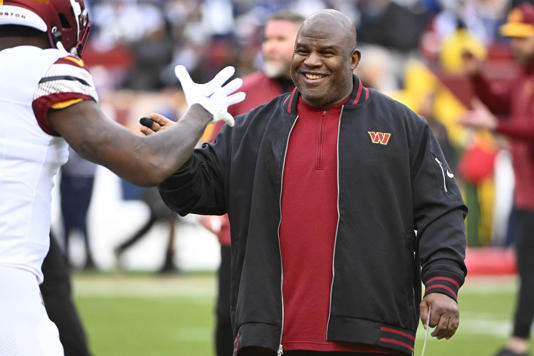
Washington Commanders offensive coordinator Eric BieniemyWashington Commanders offensive coordinator Eric Bieniemy© Brad Mills-USA TODAY Sports


As Jordan Sigler of the Gridiron Heroics reports, the Washington Commanders are making it impossible for the Kansas City Chiefs to add Eric Bieniemy to their staff ahead of the playoffs. The Chiefs are set to play the Miami Dolphins in the wild-card round this week.

The Commanders don’t have any games to play in the postseason. The Commanders fired head coach Ron Rivera Monday morning following the 4-13 campaign for the 2023 season. There was some hope in the Chiefs fanbase that they could add former Kansas City offensive coordinator Eric Bieniemy when Rivera was fired.

The Kansas City Chiefs need an offensive spark

.

The Chiefs offense has struggled this season under offensive coordinator Matt Nagy. Per GH Media files, Mike Florio with NBC Sports floated the possibility in December of Bieniemy joining the Chiefs in the postseason:

Mike Florio with NBC Sports thinks the Chiefs could make a literal splash hire for the playoffs by adding Bieniemy once he’s been relieved of his offensive coordinator duties in Washington. Patrick Mahomes has hinted recently he misses his former offensive coordinator:

“First, the Commanders would have to fire Bieniemy. If/when they move on from coach Ron Rivera, the Commanders could choose to hold other members of the staff in place, until the next coach decides whether to keep him. If that doesn’t happen, and if Bieniemy is relieved of his duties, he’d be free and clear to join any other team for the playoff run.


Why not return to the Chiefs? Quarterback Patrick Mahomes recently explained that Bieniemy brought an accountability that the team is missing. “I think Coach Bieniemy set that standard when he was here,” Mahomes said.”


The Kansas City Chiefs are getting blocked by the Commanders


The Commanders would have to play ball for the Chiefs to have an opportunity to hire Bieniemy. After Rivera’s firing on Monday, the enemy is still required to handle his duties with the Commanders.

According to Ralph Vacchiano with Fox Sports, Bieniemy won’t be relieved of his duties in Washington anytime soon. Owner Josh Harris indicated Monday that he plans to keep the Commanders assistant coaches on staff until the team hires a head of football operations.

The Commanders have every right to keep Bieniemy in Washington for now. Bieniemy could wind up getting an interview for the head coaching vacancy.

The Chiefs will have to wait out the situation in Washington for a few days or a week. The Commanders will need to hire a head of football operations rather quickly to expedite hiring their next head coach.

Until then, Bieniemy will not be heading to Kansas City to fulfill a role similar to what Vic Fangio did with the Philadelphia Eagles in last year’s Super Bowl. And it certainly won’t be in time for him to have much effect on the Chief’s contest against the Dolphins.

The Chiefs need Nagy to bring them through at least one more week.


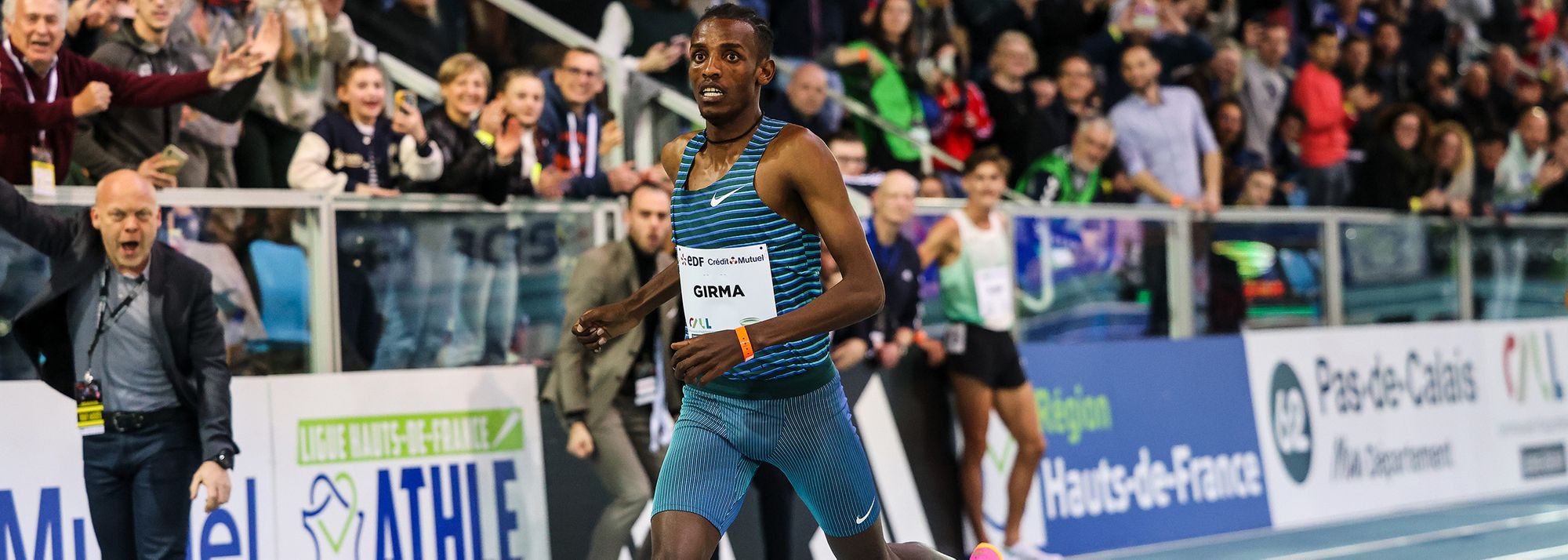
Fred Kerley, Lamecha Girma set for debut

At the New Balance Indoor Grand Prix debuts in Boston on Feb 4


Lamecha Girma breaks the world indoor 3000m record in Lievin (© Dan Vernon)


Fred Kerley, the 2022 World Champion at 100m, and Lamecha Girma, the world record-holder in the 3000m steeplechase, are set to make their New Balance Indoor Grand Prix debuts on Sunday, Feb 4, organizers announced today.


Tickets for the event at the TRACK at new balance on Feb 4, which forms part of the World Athletics Indoor Tour Gold, are now on sale at www.nbindoorgrandprix.com or by calling 1-877-849-8722.

One of the most versatile sprinters racing today, Fred Kerley, will run at the New Balance Indoor Grand Prix for the first time. Kerley won his first individual global medal at the 2019 World Athletics Championships in Doha, taking bronze in the 400m. Two years later, Kerley dropped the 100m, in which he earned the silver medal at the Olympic Games in Tokyo. In 2022, Kerley won the 100m gold at the World Athletics Championships in Eugene, OR. Kerley will be racing the first 60m dash of his career at the New Balance Indoor Grand Prix, where he will face compatriot and previously announced triple world champion Noah Lyles.

Another international medalist making his Boston debut, Lamecha Girma, leads the field in the men’s 3000m. Girma has won 3000m steeplechase silver medals at the 2019, 2022, and 2023 World Athletics Championships and the 2020 Olympic Games. Last year, Girma ran 7:23.81 at the Meeting Hauts-de-France Pas-de-Calais in Liévin, France, to erase Daniel Komen’s 25-year-old world indoor record at 3000m. Continuing his record spree into the outdoor season, Girma demolished Saif Saaeed Shaheen’s 19-year-old world record in the 3000m steeplechase with a 7:52.11 clocking at the Meeting de France Diamond League in Paris.

The women’s 3000m will see the return of local favorite Elle St. Pierre. A native of Vermont and University of New Hampshire graduate, St. Pierre won the two-mile at the 2021 New Balance Indoor Grand Prix in an American record of 9:10.28, the third-fastest time in history. In 2022, she won the silver medal over 3000m at the 2022 World Athletics Indoor Championships in Belgrade before taking the 2023 season off for maternity leave. In the 3000m, St. Pierre will line up against Ireland’s Ciara Mageean, the 2022 European Championships and Commonwealth Games silver medalist at 1500m, and Ethiopia’s Medina Eisa, the world U20 record-holder at 5000m.

Those top athletes join the previously announced Gabby Thomas, Jake Wightman, Grant Holloway, Daniel Roberts, Trey Cunningham, Marco Arop, Mariano García, Bryce Hoppel and Gudaf Tsegay.

The 2024 New Balance Indoor Grand Prix will be shown live on NBC from 4:00 p.m. to 6:00 p.m. EST on Sunday, Feb 4, and is a founding member of the World Athletics Indoor Tour. The series of the best indoor athletics events worldwide awards overall tour winners $10,000 and a guaranteed spot at the 2024 World Athletics Indoor Championships in Glasgow, Scotland, in March.

In its 29th year, the New Balance Indoor Grand Prix has hosted nine world and 16 American records.

About New Balance
New Balance, headquartered in Boston, MA, has the following purpose: Independent since 1906, we empower people through sport and craftsmanship to create positive change in communities worldwide. Manufactured in the U.S. for over 75 years and representing a limited portion of our U.S. sales, New Balance MADE U.S. is a premium collection with a domestic value of 70% or greater. New Balance owns five factories in New England and one in Flimby, U.K. New Balance employs more than 7,000 associates around the globe, and in 2021, it reported worldwide sales of $4.4 billion. To learn more about New Balance, please visit www.newbalance.com, and for the latest press information, visit http://newbalance.newsmarket.com.


Culled from New Ballance Indoor Grand Prix


AFCON 2023: Everything you need to know

TotalEnergies Africa Cup of Nations Cote d’Ivoire 2023


As the TotalEnergies Africa Cup of Nations, Cote d’Ivoire 2023, approaches, the anticipation and excitement are reaching fever pitch. 


With Cote d’Ivoire hosting the tournament for the second time, football fans around the continent are gearing up for a month of intense competition.


Here’s a comprehensive guide to everything you need to know about the 34th edition of Africa’s biggest sporting event just days before the kickoff.


Hosts and Opening Match: Cote d’Ivoire is set to stage the finals, with the opening match scheduled for Saturday, 13 January, where the hosts will face Guinea-Bissau at the Alassane Ouattara Stadium in Abidjan.


Historical Context: Cote d’Ivoire is hosting the tournament for the first time since 1984.


Venue Overview: The matches will be held in six stadiums across five host cities, reflecting Cote d’Ivoire’s commitment to sports infrastructure development. The cities of Abidjan, Bouake, Korogho, San Pedro and Yamoussoukro.


Akwaba – The Official MascotThe official mascot, “Akwaba,” derived from the Baoulé language’s term for “Welcome.” Represented by an elephant, Akwaba’s attire pays homage to the host nation’s identity by mirroring Cote d’Ivoire’s home colors.


“Pokou” – The Official Match Ball: The official match ball is called “Pokou”. It honors the late Ivorian football legend Laurent Pokou, renowned for his historic achievement of scoring five goals in the 6-1 victory over Ethiopia during the 1970 tournament.


“Akwaba” – The Official Song Celebration: The official song, “Akwaba,” features Nigerian artist Yemi Alade, Egyptian rapper Mohamed Ramadan, and Ivorian music band Magic System. The anthem blends afrobeat, rap, and zouglou, embodying a unique musical fusion deeply rooted in the tournament tradition.


Group Structure: The 24 teams are divided into six groups of four teams each, with intriguing matchups like Egypt vs. Ghana in Group B and Senegal vs. Cameroon in Group C.


Tournament Format: The top two teams in each group and the four best-ranked third-placed teams advance to the last 16, followed by quarter-finals, semi-finals, a match for third place, and the final.


Kickoff Times: During the group stages, at least two games will be played each day at 14:00, 17:00, and 20:00 (all times GMT). Similar timings will be used in the knockout stages starting Saturday, 27 January.


Opening Match Details: Côte d’Ivoire vs. Guinea-Bissau at the Alassane Ouattara Stadium, Abidjan (20:00 GMT) on Saturday, 13 January.


Group Stage Kicks Off: Two games each day until 24 January across various stadiums and cities.


Opening Weekend Highlights: Record seven-time champions Egypt will face Mozambique in Group B, while holders Senegal kick off their title defense against The Gambia in Group C on Monday, 15 January.


Second Round Fixtures: Commence on Saturday, 27 January, with intriguing matchups like Group D winner vs. 3rd place Group B/E/F in Bouake (17:00 GMT).


Quarter-Final Showdown: Friday, 2 February, featuring winners from the second round at the Felix Houphouet-Boigny Stadium, Abidjan (17:00 GMT).


Semi-Final Battles: Set for Wednesday, 7 February, with the winners from the quarter-finals facing off at Bouake (17:00 GMT) and Alassane Ouattara Stadium, Abidjan (20:00 GMT).


Third-Place Play-Off: Saturday, 10 February, determining the best at the Felix Houphouet-Boigny Stadium, Abidjan (20:00 GMT).


Grand Finale: The moment everyone is waiting for – the showdown on Sunday, 11 February, at the Alassane Ouattara Stadium, Abidjan (20:00 GMT).


Tournament Favourites: Senegal, the current champions, are considered favorites despite critical players Sadio Mane, Kalidou Koulibaly, and Edouard Mendy moving to the Saudi Pro League. Other strong contenders include Morocco, Nigeria, Algeria, and Cote d’Ivoire. Fresh from reaching a World Cup semi-final, Morocco seeks Afcon glory, while Ivory Coast remains a force to be reckoned with.


Côte d’Ivoire vs. Nigeria: A high-stakes encounter in Group A on 18 January at the Alassane Ouattara Stadium, Abidjan (17:00 GMT).


Senegal vs. Cameroon: Group C heavyweight clash on 20 January at the Charles Konan Banny Stadium, Yamoussoukro (14:00 GMT).


As the clock ticks down to the kickoff, the TotalEnergies CAF Africa Cup of Nations, Côte d’Ivoire 2023, promises a spectacle of footballing brilliance, drama, and unforgettable moments.


Get ready for a month-long celebration of African football excellence!


Bilal El Khannouss’ San Pedro love

Bilal El Khannouss praises San Pedro training facilities


Morocco midfielder Bilal El Khannouss is full of praise for the training facilities in San Pedro ahead of the 34th edition of the TotalEnergies CAF Africa Cup of Nations, Cote d’Ivoire 2023.


The Atlas Lions were the first team to touch down for the tournament as they arrived in the West African country on Sunday afternoon to participate in the competition.


The North African giants trained in the country on Monday at Auguste-Denise de San Pédro stadium and were delighted with the facilities.


“I think it’s the best facility I have seen since I played in Africa. The hotel is also perfect,” said El Khannouss.


“We have everything to prepare well,” added the KRC Genk (Belgium) midfielder.


The Atlas Lions are upbeat about their campaign in Cote d’Ivoire, with Bilal El Khannouss saying that they are ready to give it their all.


“We know that the Moroccan supporters are always behind us. We saw it in all competitions. We will do everything to make them proud. I thank them for the support they give us all the time,” said El Khannouss.


El Khannouss is playing in his first TotalEnergies CAF AFCON and will rely on mentorship from the current CAF Awards Coach of the Year, Walid Regragui.


“We will listen to what the coach will tell us, and with that, we will do our best.”


Morocco kicks off their campaign against Tanzania on Wednesday, 17 January. They face DR Congo three days later before wrapping up their final group game against Zambia on 24 January.


All matches will be played at the Laurent Pokou stadium in San Pedro.


AFCON 2023: Meet the head coaches

TotalEnergies CAF AFCON: Group A


The TotalEnergies CAF Africa Cup of Nations, Cote d’Ivoire 2023, kicks off on Saturday, January 13, 2024, with the opening clash between the host country, Cote d’Ivoire, and Guinea-Bissau.


The two teams from Group A will clash at the Alassane Ouattara Stadium in Ebimpe.


Group A comprises Côte d’Ivoire, Equatorial Guinea, Guinea-Bissau, and Nigeria, each led by renowned and charismatic coaches.


Here’s an overview of the coaches of the teams in Group A.


Côte d’Ivoire: Jean Louis Gasset (69 years)


Jean Louis Gasset was appointed as the head coach of the Ivorian national team in May 2022, replacing Patrice Beaumelle, whose contract was not renewed after a disappointing CAN campaign in Cameroon, where the Elephants were eliminated in the quarterfinals by Egypt (0-0, 5-4 on penalties).


The 69-year-old French tactician guides the host nation in this competition. The mission the Ivorian Football Federation assigned him was crystal clear.


“Our goal with Gasset is to win the next CAN, or at least reach the semi-finals; otherwise, his contract will not be renewed for another year,” stated Ivorian football chief Idriss Diallo during a press conference in Abidjan.


Despite his first experience leading a national team, Jean Louis Gasset can rely on his extensive coaching background, having managed several French clubs, including Montpellier, Saint-Etienne, and Bordeaux.


He also assisted Laurent Blanc in Bordeaux with the French national team and Paris Saint-Germain.


At home, the Elephants, under his guidance, will strive to lift a third continental trophy following their successes in 1992 in Senegal and 2015 in Equatorial Guinea.


Nigeria: José Peseiro (63 years)


José Peseiro has been at the helm of the Nigerian national team since May 2022, taking over from Austin Eguavoen.


The 63-year-old Portuguese manager faces the challenging task of leading the Super Eagles in the TotalEnergies CAF Africa Cup of Nations 2023 in Côte d’Ivoire, where the country aspires to a better performance than the last edition in Cameroon, where Tunisia surprisingly eliminated them in the round of 16.


To achieve the goals set by Nigerian football authorities, José Peseiro can draw on his rich experience, having previously served as the head coach of Saudi Arabia (2009-2011) and Venezuela (2020-2021) and managed Portuguese clubs Braga, Porto, and Sporting Portugal.


With him, Nigeria aims for a fourth continental crown after triumphs in 1980, 1994, and 2013.


Equatorial Guinea: Juan Micha (48 years)


Confirmed as the head coach of Equatorial Guinea in March 2021 after a five-month interim period, Juan Obiang Micha will lead the Nzalang Nacional at the TotalNEergies CAF AFCON for the second consecutive edition.


In the 2021 edition in Cameroon, he achieved a sensational run with his team, reaching the quarterfinals after eliminating Mali in round 16 and defeating Algeria in the group stage.


At 48, Juan Michá Obiang Bicogo is a former Equato-Guinean footballer who played for his country in the late 1990s and early 2000s.


He began coaching at Fuenlabrada in Spain before joining the Equatorial Guinean women’s national team as an assistant coach from 2012 to 2014.


Before becoming the interim head coach of Equatorial Guinea in late 2020 and subsequently confirmed in March 2021, he also coached the country’s U17 and U20 teams, as well as Deportivo Unidad, a club based in Malabo.


He aims to surpass the 2015 performance at home, the year of Nzalang Nacional’s best-ever finish in the competition (fourth place).


Guinea-Bissau: Baciro Cande (57 years)


Baciro Cande (57 years) has been in charge of the Guinea-Bissau national team since 2016. This year in Côte d’Ivoire, he will lead his country in its fourth TotalEnergies CAF Africa Cup of Nations.


A former defender, he played for Estrela de Amadora and Amara in Portugal before starting a coaching career.


This marks his second stint at the helm of Djurtus after an initial tenure between 2001 and 2009. In the meantime, he also coached Sporting Clube de Bissau (2009-2016), leading them to a league title in 2010.


In 2023, he undoubtedly aspires to guide his team beyond the first round, a stage they have never surpassed in three previous participations (2017, 2019, 2021).


Group C


– Group C teams are led by three former African internationals and one Belgian coach
– Coaches from Cameroon and Senegal have previously been crowned in the CAF Total Energies Africa Cup of Nations.
– Tom Saintfiet relies on his extensive African experience to make Gambia shine.


The TotalEnergies CAF Africa Cup of Nations 2023 in Côte d’Ivoire is rapidly approaching, stirring up excitement and enthusiasm across all African nations.


The honor of hosting the opening ceremony of this prestigious continental event, now in its 34th edition, on January 13, 2024, goes to the Alassane Ouattara Olympic Stadium.


The battle looks tough in Group C, consisting of Cameroon, Senegal, Guinea, and Gambia. In anticipation of this grand event, CAFOnline.com sheds light on the coaches of this group based in Yamoussoukro.


Senegal: Aliou Cissé (47 years)

Senegalese coach Aliou Cissé is a former Senegalese international who excellently represented the “Lions of Teranga.” Known for his defensive rigor, he played a crucial role in the Senegalese defense for many years.


Aliou Cissé has participated in the TotalEnergies CAF Africa Cup of Nations as a player and a coach. Unfortunate finalist in 2002 against Cameroon in Mali, he finally won the title as a coach in the 2021 edition.

Having played for several French and English clubs, Aliou Cissé ended his playing career in 2009 before transitioning to coaching.


In 2012, he became the assistant coach of the Senegalese U-23 team, later becoming the head coach of the same category until 2015.


That year, he was appointed head coach of the Senegal national team. In February 2022, he made history by giving Senegal its first-ever TotalEnergies CAF Africa Cup of Nations trophy.


He hopes to retain the title this year in Côte d’Ivoire, possibly as a payback to the Ivorians who took the trophy from Senegal in the 1992 edition.


Cameroon: Rigobert Song (47 years)

The Cameroonian team, one of the perennial favorites with five titles, is led by Rigobert Song, who has already shone as a player and captain of the team before transitioning to the sidelines.


He won the 2000 and 2002 editions with his country and will experience his first coaching stint in the competition. During his playing career, the 47-year-old coach represented several French, English, and Turkish clubs.

Shortly after being appointed head of the Indomitable Lions, Rigobert Song succeeded in qualifying Cameroon for the last FIFA World Cup in Qatar, eliminating Algeria in the playoffs. He is eager to create another sensation on Ivorian soil in this Africa Cup of Nations.


Guinea: Kaba Diawara (48 years)

The Guinean national football team is led by Kaba Diawara, who initially represented the French U-21 team before joining his country of origin.


He participated several times as a player in the TotalEnergies CAF Africa Cup of Nations. At the helm of the Guinean selection, he will participate in his second AFCON after the 2021 edition in Cameroon, aspiring to etch his name in history.

As a player, Kaba Diawara distinguished himself with various French and English clubs, including Paris Saint-Germain, Olympique de Marseille, Arsenal, and West Ham.


He also played in Turkey before ending his playing career in 2009. Kaba Diawara has been directing the Guinean team since October 2021.


The last Africa Cup of Nations in Cameroon was his first significant experience as a football coach.


Gambia: Tom Saintfiet (51 years)

Belgian coach Tom Saintfiet is one of the best non-African coaches in Africa, with extensive experience leading several African clubs and national teams.

Tom Saintfiet had a brief playing career before hanging up his boots at 24. His coaching career began in Belgium, but he quickly traveled across Africa, coaching several clubs and national teams, including Malawi, Togo, Ethiopia, Zimbabwe, and Namibia.

The Belgian coach relies on his vast experience and perfect understanding of African football to make an impact with the Gambian team, which already surprised as quarter-finalists in the 2021 edition in Cameroon.


Group E


  • Three of the four nations are led by former footballers.
  • Namibia’s Collin Benjamin, the youngest of all four coaches
  • Tunisia and South Africa are the two former champions in the group


Abidjan’s Stade Olympique Alassane Ouattara officially kicks off the biggest event on African soil, the TotalEnergies CAF Africa Cup of Nations, Cote d’Ivoire 2023 on Saturday.


With all 24 nations raring to go for Africa’s most treasured football prize, CAFOnline looks at the men in the driving seats and looks to navigate their way past a tough Group E pool.


All teams, except Tunisia, will be led by coaches who have once laced the boots and are now behind the tactics board as head coaches.


GROUP E: Tunisia, Mali, South Africa, Namibia


Korhogo’s Stade Amadou Gon Coulibaly plays host to Group E, which consists of two former African champions who both coincidentally won it on home soil.


Tunisia (2004) and South Africa (1996) are the former champions in the group, while Mali’s best finish was in 1972 when they lost in the final against Congo.


The Brave Warriors of Namibia are making their fourth appearance and hoping to go beyond the group stages for the first time.


Meet the Coaches:


Tunisia – Jalel Kadri (52)


Jalal Kadri temporarily took over the Tunisian coaching reins during the TotalEnergies AFCON 2021 in Cameroon after the then head coach, Mondher Kebaier, contracted COVID-19 just days before Tunisia’s Round of 16 ties against Nigeria, which he guided the team to a 1-0 victory over the three-time champions.


Despite bowing out of the 2021 edition in the quarterfinals against Burkina Faso, Kadri qualified the team for the 2022 FIFA World Cup and will be looking to draw from both experiences when leading his side in Cote d’Ivoire.


Mali – Eric Chelle (46)


Born in Abidjan, Cote d’Ivoire, 46 years ago, Eric Chelle will compete in his first-ever TotalEnergies AFCON as a manager in his native country.


Following an incredibly successful playing career in France, which includes stints with Valenciennes and Racing Club de Lens, Chelle shifted focus to the tactics board and had his first coaching assignment in 2016 with French club GS Consolat.


In May 2022, the former defender was appointed head coach of Mali and will have the tough assignment of leading the Eagles in Cote d’Ivoire.


South Africa – Hugo Broos (71)


Guided Cameroon to their fifth TotalEnergies AFCON title in 2017, coach Hugo Broos will be at the helm of a South African side desperate for continental success, having last won the title in 1996.


Undoubtedly, the team has seen a significant improvement since the taking over of the Belgian tactician, leading them to their 11th TotalEnergies AFCON appearance after last making an appearance in Egypt during the 2019 edition.


A fan of blending youth and experience in his squads, Broos will be looking at replicating his 2017 success with a young generation of Bafana Bafana.


Namibia – Collin Benjamin (45)


Namibia is preparing to make its fourth TotalEnergies AFCON appearance and has yet to make it beyond the competition’s group stages. Comfortably carrying the underdog’s tag, under Collin Benjamin, the Brave Warriors have one of Africa’s most astute coaches looking to make a name for himself following a successful playing career in Germany.


At 45, Benjamin is the youngest coach in the group. He will be looking to outsmart his more experienced counterparts during the group stages and make history for his nation by going past the group stages.


Group F

  • One local coach and three expatriates will be on the sidelines in Group F of the CAN 2023
  • Walid Regragui is the only coach to lead an African team to the semi-finals of a World Cup.
  • It will be the first AFCON as a coach for Adel Amrouche with Tanzania.


In a few days, the Alassane Ouattara Olympic Stadium will host the kickoff of the 34th edition of the TotalEnergies CAF Africa Cup of Nations, Côte d’Ivoire 2023.


CafOnline.com takes a closer look at the coaches in contention. Group F of the TotalEnergies CAF AFCON features four teams with different playing styles. And with seasoned tacticians whose paths and methods are opposed. Let’s explore.


Avram Grant (69 years)


He made a name for himself in the English Premier League at Chelsea, reaching the final of the 2008 UEFA Champions League.


However, Avram Grant’s first challenge on the continent was Ghana, where he led from 2014 to 2017. He managed to take the Black Stars to the TotalEnergies CAF AFCON final in 2015 against Côte d’Ivoire (lost on penalties 8-9, 0-0 after extra time).


Having been at the helm of Zambia for a year, the Israeli Grant revitalizes Chipolopolo, aiming to recreate winning the TotalEnergies CAF AFCON finals in 2012.


Sébastien Desabre (48 years)


The French technician is a seasoned traveler of the continent. His first appearance dates back to 2010 with ASEC Mimosas in Côte d’Ivoire.


Since then, he has managed numerous clubs in Tunisia, Angola, Algeria, Cameroon, Morocco, and Egypt. Sébastien Desabre qualified Uganda for its first TotalEnergies CAF AFCON in over 30 years in 2019 in Egypt, achieving a historic place in the round of 16 (eliminated by Senegal).


Despite being dismissed after the competition, his journey earns him a rebound with the Leopards of the DR Congo for the past two years. Renowned for his tactical prowess, Desabre is a leader of men, precisely what the Leopards need to restore their reputation.


Adel Amrouche (56 years)


Since his debut as a coach on the continent, moving through Equatorial Guinea, Kenya, Libya, and Botswana, Adel Amrouche has never had the opportunity to participate in the TotalEnergies CAF AFCON.


This will now be the chance in Côte d’Ivoire for the Belgian-Algerian coach with Tanzania, where he joined in March 2023. Amrouche can rely on a group of players whose potential has evolved over the years, symbolized by Taifa Stars’ star, Mbwana Samatta.


Walid Regragui (49 years)


For his first experience as the coach of a national team, Walid Regragui made a strong impact by guiding Morocco to the semi-finals of the World Cup in Qatar.


Since then, expectations have been high around the former Atlas Lion. However, Regragui remains level-headed. He has a quality squad and ensures that his message resonates well.


For his second TotalEnergies CAF AFCON with Morocco, Regragui has only one ambition: to go as far as possible and lay hands on the trophy.


Okocha, Others promote African football

African legends Diouf, Gyan, Hassan, and Okocha were the first to sign up for the CAF Ambassadors Program


African football legends El Hadji Diouf, Asamoah Gyan, Ahmed Hassan, and Augustine ‘Jay-Jay’ Okocha are the first names to be signed up for the newly established CAF Ambassadors program.


Football Legends, community role models, and other famous personalities will form part of the CAF Ambassadors Programme. Their role will include promoting CAF and African Football and playing an essential role in other activities, tournaments, charity initiatives, and commercial and social events.


The criteria for selecting the four legends who are well-known public figures include but are not limited to sporting and career achievement, social impact, and commercial value.


Diouf, a two-time CAF Player of the Year, is fondly remembered for his exploits with the Teranga Lions of Senegal’s golden generation of the 2000s, which reached the final of the 2002 Africa Cup of Nations and also the quarters of the FIFA World Cup in South Korea and Japan.


On the other hand, Gyan had a remarkable career, rising to captain of Ghana’s Black Stars and featuring in seven Africa Cup of Nations, reaching the final in 2010 and 2015. His six goals from three FIFA World Cups make him the African with the most goals in the history of the Mundial.


On his part, Hassan remains one of the most decorated players in the history of African football, winning four Africa Cup of Nations titles with the Pharaohs of Egypt – 1998, 2006, 2008 and 2010. He is also famous for his over 170 caps with Egypt, which ranks him amongst the most-capped players ever.


Nigeria’s iconic midfielder Okocha was a delight to watch during his heyday. He won the Africa Cup of Nations with the Super Eagles in 1994 and Olympic gold two years later in Atlanta, USA.


The Ambassadors Program is expected to open CAF and its activities to new frontiers with the inclusion of personalities from other fields, as well as commercial benefits and social impact across the continent.


Through the continuous connection with legends and celebrities, the program will open up new revenue streams for CAF and enhance engagement with fans and other stakeholders globally.


Meanwhile, CAF will announce more names forming part of the Ambassadors Programme.


‘Better days ahead Nigeria’s Paralympics’

0

Paris 2024-PCN boss predicts exceptional outings for para-athletes


Table Tennis Star, A. Koleosho of Nigeria


By Rasheed Adewuyi


Sunday, Odebode, President of the Paralympics Committee Nigeria (PCN), has predicted a better and brighter future for para-athletes this year.

Nigeria will participate in the forthcoming Paralympics Games scheduled to be held in Paris, France.

Odebode, in his New Year message to Nigeria para-athletes, said that the Committee is doing all within its capabilities to ensure that the athletes make it to the podium at the Games and other international meets this year. It would be recalled that some athletes from the para table tennis federation have already qualified for the games and athletics.


The para table tennis division has already qualified nine athletes for the Paris 2024 Paralympic games and hopes to qualify more with the qualification windows open in the first quarter of this year.


The qualification for para powerlifting and para Badminton, which is based on ranking, is still ongoing, and we are confident that the eight athletes on the pathway will be able to pick their ticket at the end of their qualifiers, which will end in June.


The sport of para-badminton is also doing everything possible to qualify for the Paralympic games in Paris, as most of the top athletes have attended the mandatory three international tournaments as specified by the Badminton World Federation BWF.


He also disclosed that the athletes prepare well to make the country proud at the All Africa Games slated for Accra, Ghana, in March and other international meets.


The PCN boss, who commended the minister of sports for his vision and aspirations to take sports to the highest level, informed that para-athletes will qualify for more events for Paris 2024 and expressed optimism that the athletes will record more medals at the Games than in previous editions.


‘We are fully prepared for the Games, and I am optimistic that Nigeria will perform better at the Games than the previous ones, and we shall do well this year at various sporting meets and the All Africa Games”, he said.


Ohaegbulem leads Falconets against Burundi

0

Colombia 2024: Danjuma picks 19 players to face battle of Dar es Salaam


Captain Oluchi Ohaegbulem


By Rasheed Adewuyi


Head Coach Chris Musa Danjuma has selected Captain Oluchi Ohaegbulem, goalkeeper Faith Omilana, defender Shukurat Oladipo, and midfielder Taiwo Afolabi among a list of 19 Falconets of Nigeria who will file out against Burundi’s U20 girls in a FIFA U20 Women’s World Cup final qualifying fixture, first leg encounter in Dar es Salaam, Tanzania on Sunday.


Goalkeeper Shukura Bakare, who was in goal for the home game against Tanzania in the first round (which the Falconets won 2-1 to reach this final stage of the series) has also been picked, alongside defenders Jumoke Alani and Oluwabunmi Oladeji, midfielders Adoo Yina and Chima Olise, and forwards Chiamaka Okwuchukwu, Janet Akekoromowei, Yemisi Samuel and Opeyemi Ajakaye.


The 2022 FIFA World Cup quarter-finalists are scheduled to travel out of Nigeria on Tuesday for the first leg encounter, for which the Confederation of African Football has picked South African official Nonjabulo Nonhle Ndlela as referee.


Her compatriots Maneo Evodia Tau and Nandipha Menze will be assistant referee 1 and assistant referee 2, respectively. At the same time, Nteboheleng Theresia Setoko from Lesotho will serve as fourth official.


Sunday’s encounter at the Azam Stadium Complex will see Tanzanian Somoe Robert Ng’itu play the commissioner role, while Fransiska Katjaimo from Namibia will be the referee assessor.


The return leg match will occur at the MKO Abiola National Stadium, Abuja on Saturday, 20th January.


FALCONETS TO TACKLE BURUNDI:


Goalkeepers: Anderline Mgbechi, Shukura Bakare, Faith Omilana


Defenders: Oluchi Ohaegbulem; Jumoke Alani; Rebecca Adegbemile; Shukurat Oladipo; Oluwabunmi Oladeji


Midfielders: Adoo Yina; Taiwo Afolabi; Olushola Shobowale; Aminat Folorunsho; Chioma Olise


Forwards: Opeyemi Ajakaye; Chiamaka Okwuchukwu; Chisom Chima; Janet Akekoromowei; Chiamaka Osuigwe; Oluwayemisi Samuel


Guinea-Bissau coach cautions Super Eagles

As ‘Wild Dogs’ reveal TotalEnergies CAF AFCON target after landing in Cote d’Ivoire


Guinea-Bissau coach Baciro Candé says they want to reach the knockout stages of the TotalEnergies CAF Africa Cup of Nations after arriving in Cote d’Ivoire on Sunday to participate in the tournament.


The Djurtus (The Wild Dogs) became the second side to arrive in the West African country to participate in the tournament when they touched down at Abidjan’s Félix Houphouët-Boigny Airport for the continental showpiece event.


Coach Candé and his team were greeted by an Ivorian drumming and dancing traditional welcome party and dozens of their compatriots who had gathered at the airport as they prepared to face the host nation in the competition’s opening match on Saturday.


Drawn to play in Group A, Guinea-Bissau will face a tough challenge as they will also play Nigeria and Equatorial Guinea in the group.


The Djurtus will make their fourth appearance at the TotalEnergies CAF Africa Cup of Nations. They will be honored to play the opening match on Saturday against the host country at the Alassane Ouattara Olympic Stadium in Ebimpe.


The first coach to qualify his country for the most prestigious sporting event in Africa in 2017, the 56-year-old coach Candé will be making his fourth appearance in the tournament and at the helm of the side.


Saturday’s opening match will be the second experience of Guinea-Bissau in playing in the opening match of the competition after featuring in the opening game of the 2017 edition in Gabon with Candé in charge.


“I’m used to it; in the first competition I participated in, we played the opening match against Gabon and drew (1-1). I know that Côte d’Ivoire is stronger than Gabon, but Guinea-Bissau will do its job, slowly,” assured Candé in an interview with CAFOnline.com upon their arrival in Abidjan on Sunday.


Drawn into a challenging Group A alongside Côte d’Ivoire, Nigeria, and Equatorial Guinea, Candé and his team hope to create a surprise by advancing to the knockout stage for the first time.


“Our goal is to get past the first round finally. Our group is indeed very tough with opponents like Côte d’Ivoire, Nigeria, and Equatorial Guinea, but anything is possible in football; anything is possible,” declared the coach.


Guinea-Bissau will face Equatorial Guinea on the second matchday scheduled for January 18, 2024, in Group A.


They will conclude the group stage with another challenge against Nigeria on January 22 at the Félix Houphouët-Boigny Stadium in Abidjan.